
Injured in a Right Hook Bicycle Accident? We Help Arizona Cyclists Fight Back.
A right hook bicycle accident is one of the most common—and one of the most preventable—types of collisions between motorists and cyclists. These crashes typically occur when a driver passes a cyclist and then immediately turns right across the rider’s path, leaving little or no time to react. The result is often a devastating collision that causes serious injuries, expensive medical bills, lost income, and long-term physical and emotional consequences.
At Bike Accident Attorneys, we understand these crashes because we have experienced the same roads, intersections, and traffic conditions that Arizona cyclists face every day. Led by Arizona trial lawyer and lifelong cyclist Ben Dodge, our firm is dedicated exclusively to representing injured cyclists throughout Arizona. We understand not only the legal issues involved in a right hook bicycle accident, but also the split-second dynamics that cause these collisions and the misconceptions cyclists often face when pursuing an insurance claim.
If you or someone you love has been injured in a right hook bicycle accident, you deserve an attorney who understands bicycles as well as the law. We investigate every case thoroughly, preserve critical evidence, work with qualified experts when necessary, and fight to recover the maximum compensation available under Arizona law.
Ben’s Perspective: Why Right Hook Crashes Are So Dangerous
As a cyclist who rides more than 10,000 miles each year on Arizona roads, right-hook collisions are one of the crash scenarios I think about every single ride. I’ve experienced countless moments where a driver passes me, only to immediately turn right into my path. Every experienced cyclist has had that sinking feeling—the realization that the vehicle beside you either doesn’t see you or has misjudged your speed.
From inside a car, the maneuver may seem insignificant. To a cyclist, it can become a split-second emergency with almost no opportunity to react.
A bicycle simply cannot stop or change direction as quickly as most people assume. When a vehicle suddenly turns across a cyclist’s line of travel, the rider is often forced to slam on the brakes, collide with the side of the vehicle, or swerve into another lane of traffic. At typical roadway speeds, there may only be a second or two to recognize the danger before impact.
These crashes are particularly frustrating because they are almost always preventable. In many cases, the driver had already seen the cyclist moments earlier while passing. The collision happens because the driver underestimates the cyclist’s speed, fails to check mirrors or blind spots before turning, or simply forgets the cyclist is still traveling beside them.
I’ve raced bicycles across America, across France, and competed in Ironman events. I’ve spent thousands of hours riding on public roads, and I can tell you this with complete confidence: right-hook collisions are not rare accidents. They are predictable crashes that occur every day because motorists fail to recognize and respect a cyclist’s lawful place on the roadway.
That perspective shapes how I investigate every case. I don’t simply read the police report and accept the conclusions. I evaluate the crash from the perspective of someone who understands cycling dynamics, rider positioning, vehicle speed, intersection geometry, visibility, and the countless factors that influence how these collisions actually occur.
When I represent an injured cyclist, I’m not just bringing legal experience to the case. I’m bringing the perspective of someone who has lived the experience, understands the risks, and knows what it means to share Arizona roads with motor vehicles.
What Is a Right Hook Bicycle Accident?
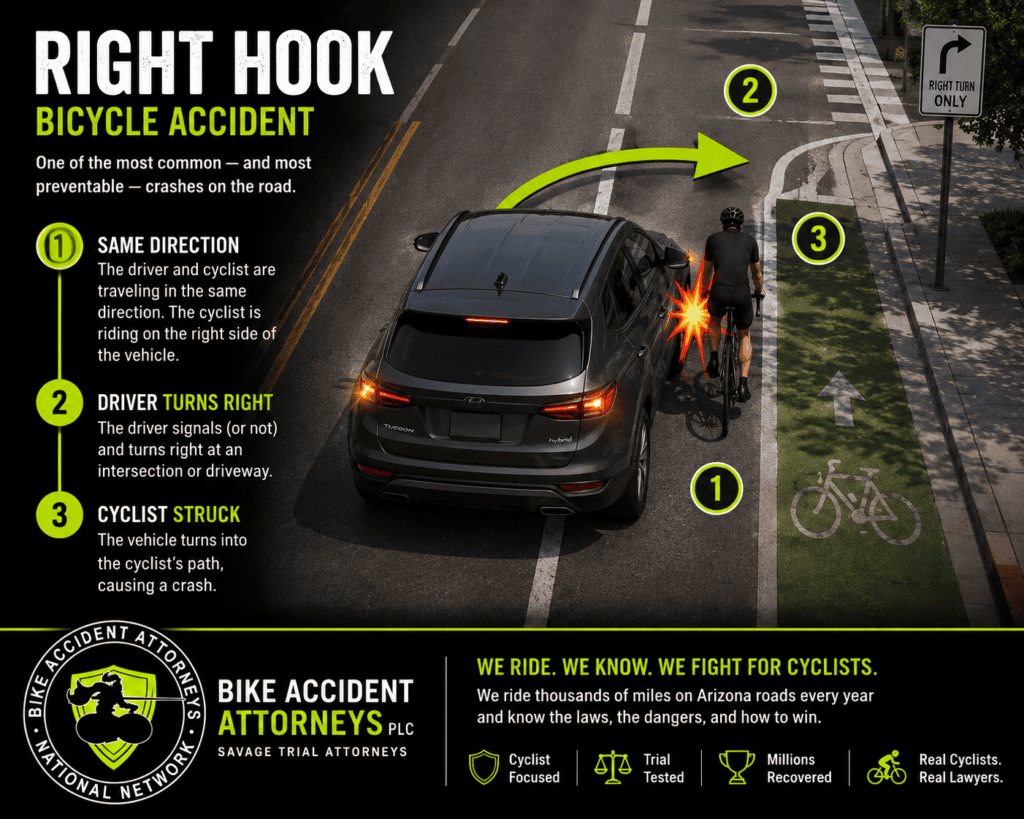
A right-hook bicycle accident occurs when a motor vehicle overtakes or travels alongside a cyclist and then turns right across the cyclist’s path of travel. Because the cyclist is continuing straight while the driver turns, the rider often has little or no opportunity to avoid a collision.
Right-hook crashes most commonly occur at intersections, driveways, parking lot entrances, shopping centers, and commercial developments where vehicles are making frequent right-hand turns. They also occur when drivers pass a cyclist only to immediately slow down and turn into a business or side street without leaving sufficient space for the cyclist to continue safely.
One of the reasons these crashes are so dangerous is that they often happen unexpectedly. A driver may look ahead for vehicle traffic but fail to recognize that a cyclist is still traveling beside them. In other cases, the driver sees the cyclist but incorrectly assumes they have enough time to complete the turn before the rider reaches the intersection.
Unfortunately, those assumptions can have devastating consequences.
Unlike occupants of a motor vehicle, cyclists have no seatbelts, airbags, or steel frame to absorb the force of an impact. When a vehicle turns directly into a cyclist’s path, the rider may strike the passenger side of the vehicle, be thrown over the handlebars, slide underneath the vehicle, or be forced into adjacent traffic. Even crashes at relatively low speeds can result in traumatic brain injuries, spinal injuries, fractured bones, severe road rash, or permanent disability.
Where Right Hook Accidents Commonly Occur
Right-hook bicycle accidents frequently occur in locations where drivers are focused on traffic rather than cyclists, including:
- Signalized intersections
- Stop-sign controlled intersections
- Dedicated bike lanes
- Shared roadway bike lanes
- Driveway entrances and exits
- Shopping center entrances
- Gas stations
- Commercial parking lots
- Multi-use roadway corridors with heavy turning traffic
In Arizona, these crashes are especially common along busy urban corridors where designated bike lanes run alongside vehicle travel lanes. As communities continue to expand bicycle infrastructure, drivers and cyclists must remain alert to the increased potential for right-turn conflicts at intersections and driveways.
Why These Crashes Are Usually Preventable
The vast majority of right-hook bicycle accidents are preventable.
Drivers can often avoid these collisions by checking mirrors, scanning blind spots, signaling their intentions early, reducing speed appropriately, and yielding to cyclists who are lawfully traveling straight through an intersection or alongside the roadway.
Likewise, cyclists who ride predictably, remain visible, obey traffic laws, and stay alert to turning vehicles can reduce their risk. However, even the safest cyclist cannot always avoid a driver who suddenly turns across their path without warning.
When a right-hook collision occurs, a thorough investigation is often necessary to determine exactly how the crash happened, whether traffic laws were violated, and who should be held legally responsible.
Why Right Hook Bicycle Accidents Happen
Right-hook bicycle accidents rarely occur because of a single mistake. More often, they result from a combination of driver inattention, poor judgment, and a failure to recognize the unique dynamics of sharing the road with cyclists. While every collision is different, certain patterns appear time and time again.
Drivers Underestimate a Cyclist’s Speed
One of the most common causes of a right-hook collision is a driver’s incorrect assumption about how quickly a cyclist is traveling. Experienced road cyclists often maintain speeds of 18 to 30 miles per hour on flat roads, and even recreational riders can travel much faster than many motorists expect.
A driver may pass a cyclist believing they have plenty of room to make a right turn, only to discover the rider reaches the intersection much sooner than anticipated. By the time the driver begins turning, the cyclist has nowhere to go.
Failure to Check Mirrors and Blind Spots
Many right-hook crashes occur because the driver simply fails to perform one final mirror or blind-spot check before turning. A cyclist who was clearly visible just moments earlier can disappear from the driver’s immediate field of view if they fail to look again before initiating the turn.
A single missed glance can have devastating consequences.
Passing Too Closely Before Turning
Drivers sometimes overtake a cyclist only to immediately slow down and turn right into a driveway, business entrance, or side street. This maneuver leaves the cyclist trapped between the turning vehicle and the curb or bike lane, creating an almost impossible situation to avoid.
The closer the vehicle passes before turning, the less time and space the cyclist has to react safely.
Distracted Driving
Cell phones, navigation systems, passengers, and other distractions continue to contribute to serious bicycle crashes throughout Arizona. A distracted driver may focus on finding an address, locating a parking lot entrance, or watching vehicle traffic while completely overlooking a cyclist traveling alongside them.
Failure to Yield to a Cyclist Traveling Straight
Cyclists traveling straight through an intersection generally have the same right to continue as any other lawful roadway user. Drivers who turn across a cyclist’s path without yielding create one of the most dangerous conflict points on the road.
Bike Lane Conflicts
Bike lanes improve safety in many situations, but they can also create confusion when motorists cross them to make right turns. Drivers sometimes focus exclusively on vehicle traffic approaching from the left while forgetting to check the bike lane immediately before turning.
When that happens, the cyclist often has only seconds—or less—to recognize the danger.
Commercial Vehicles and Large Trucks
Right-hook crashes involving delivery vans, garbage trucks, buses, construction vehicles, and tractor-trailers are particularly dangerous. These vehicles have significantly larger blind spots, require wider turning movements, and generate forces capable of causing catastrophic injuries.
Because of their size and weight, commercial vehicle collisions frequently result in life-altering injuries or fatalities for cyclists.
Dangerous Road Design
Not every right-hook collision is caused solely by driver behavior. Poorly designed intersections, faded pavement markings, obstructed sight lines, inadequate bike lane transitions, and confusing traffic patterns can all contribute to these crashes.
In some cases, roadway design itself becomes an important part of the investigation.
Most Right Hook Crashes Are Preventable
Perhaps the most frustrating aspect of a right-hook bicycle accident is that it almost never has to happen.
A driver who allows sufficient passing distance, checks mirrors and blind spots, signals early, slows appropriately, and yields before turning can prevent the vast majority of these collisions. Likewise, well-designed intersections, clearly marked bicycle facilities, and greater awareness of cyclists on Arizona roads all contribute to safer outcomes.
When those precautions are ignored, innocent cyclists often pay the price.
Arizona Laws That Apply to Right Hook Bicycle Accidents
Determining who is legally responsible for a right-hook bicycle accident requires more than simply reviewing a police report. These cases often involve multiple Arizona traffic laws, questions about right-of-way, and disputes over what each person was doing in the moments before the collision. A thorough understanding of Arizona bicycle law is essential to protecting an injured cyclist’s rights.
Cyclists Have the Same Rights as Other Road Users
Many people mistakenly believe cyclists have fewer rights than motorists. In reality, Arizona law generally gives cyclists the same rights—and many of the same responsibilities—as drivers of motor vehicles when operating on public roadways. A cyclist traveling lawfully through an intersection or along the roadway is not required to surrender those rights simply because a motor vehicle wants to turn.
Drivers Must Turn Safely
A driver making a right turn has a duty to do so safely. Before turning across a cyclist’s path, the driver should ensure the movement can be completed without creating an unreasonable risk of collision. Passing a cyclist and immediately turning across their line of travel is one of the most common situations that gives rise to a right-hook crash.
Bike Lanes Create Additional Responsibilities
Many right-hook collisions occur where bike lanes continue through intersections or across driveway entrances. Drivers must remain aware of cyclists traveling in these designated areas before crossing into the bike lane to complete a turn.
Likewise, cyclists must understand how bike lane rules apply in different roadway configurations. Determining whether everyone was using the roadway properly often becomes an important part of the investigation.
Comparative Fault Does Not Automatically Prevent Recovery
Insurance companies frequently argue that the cyclist was partially responsible for the crash. They may claim the rider was traveling too fast, failed to keep a proper lookout, or should have anticipated the driver’s turn.
Arizona follows a pure comparative fault system. This means an injured cyclist may still recover compensation even if they are found to have been partially at fault for the accident. The amount of compensation may be reduced by the cyclist’s percentage of fault, but a partial allocation of responsibility does not automatically prevent recovery.
Because comparative fault can significantly affect the value of a claim, it is critical that every right-hook accident be investigated thoroughly rather than accepting the insurance company’s version of events.
Insurance Coverage Can Be More Complicated Than You Think
Many injured cyclists assume recovery is limited to the at-fault driver’s insurance policy. In reality, additional coverage may be available depending on the circumstances.
Potential sources of recovery can include:
- The at-fault driver’s liability insurance
- Uninsured motorist coverage
- Underinsured motorist coverage
- Medical payments coverage (MedPay)
- Commercial insurance policies
- Umbrella insurance policies
Identifying every available insurance policy is often one of the most important steps in maximizing an injured cyclist’s financial recovery.
Every Right Hook Case Is Different
No two right-hook bicycle accidents are exactly alike. Road design, traffic signals, witness statements, video footage, vehicle speed, cyclist positioning, and applicable Arizona traffic laws all influence how liability is determined.
At Bike Accident Attorneys, we carefully analyze every aspect of a collision to determine what happened, preserve critical evidence, and build the strongest possible case for our clients.
Want to learn more about cyclist rights, traffic laws, insurance coverage, and liability after a bicycle crash? Visit our comprehensive Arizona Bicycle Laws Guide for an in-depth explanation of the laws that protect Arizona cyclists.
Common Injuries Caused by Right Hook Bicycle Accidents
Because right-hook bicycle accidents often occur with little or no warning, cyclists rarely have enough time to brake or maneuver away from the collision. Many riders strike the side of the turning vehicle, are thrown over the handlebars, or are ejected onto the roadway. Even crashes at relatively low speeds can result in serious, life-changing injuries.
The severity of a cyclist’s injuries depends on many factors, including vehicle speed, the angle of impact, whether the rider was wearing a helmet, surrounding traffic, and whether a secondary collision occurred after the initial impact.
Some of the most common injuries we see in Arizona right-hook bicycle accident cases include:
Traumatic Brain Injuries (TBI)
Head injuries are among the most serious consequences of a bicycle accident. Even when a cyclist is wearing a properly fitted helmet, the force of a collision can cause concussions, traumatic brain injuries, skull fractures, and long-term cognitive impairments. Symptoms such as headaches, dizziness, memory problems, confusion, or difficulty concentrating should never be ignored after a crash.
Broken Bones and Orthopedic Injuries
Cyclists instinctively extend their arms to break a fall, making fractures to the wrist, hand, forearm, elbow, and shoulder extremely common. We also frequently see broken collarbones, ribs, hips, pelvises, legs, and ankles following right-hook collisions.
Spinal Cord and Back Injuries
The violent force of being thrown from a bicycle can place tremendous stress on the spine. Injuries may include herniated discs, fractured vertebrae, nerve damage, chronic back pain, and, in the most severe cases, partial or complete paralysis.
Severe Road Rash and Soft Tissue Injuries
Sliding across pavement can remove multiple layers of skin, resulting in painful abrasions that sometimes require skin grafts or reconstructive treatment. Cyclists also commonly suffer torn ligaments, muscle strains, tendon injuries, deep bruising, and other soft tissue damage that can limit mobility for months.
Facial and Dental Injuries
Impacts involving the handlebars, pavement, or a motor vehicle can cause broken facial bones, jaw fractures, dental injuries, eye injuries, and permanent scarring. These injuries often require multiple surgeries and extensive rehabilitation.
Internal Injuries
The blunt force of a collision may damage internal organs or cause internal bleeding that is not immediately apparent. Injuries to the lungs, liver, spleen, kidneys, or other organs can become life-threatening if not promptly diagnosed and treated.
Psychological Trauma
Not all injuries are visible. Many cyclists experience anxiety, depression, sleep disturbances, or post-traumatic stress after a serious collision. It is not uncommon for riders to lose confidence returning to the road, even after their physical injuries have healed.
Your Health Comes First
Following a right-hook bicycle accident, your first priority should always be your health and recovery. Some injuries—particularly traumatic brain injuries, spinal injuries, and internal bleeding—may not produce obvious symptoms immediately after the crash. Seeking prompt medical evaluation not only protects your health but also creates important medical documentation that may become critical if you pursue a personal injury claim.
At Bike Accident Attorneys, we work closely with injured cyclists to understand the full extent of their injuries, future medical needs, lost earning capacity, and the long-term impact the crash has had on their lives. Our goal is to pursue compensation that reflects not only today’s medical bills but the complete physical, emotional, and financial consequences of the accident.
Investigating a Right Hook Bicycle Accident
Winning a right-hook bicycle accident case requires far more than reviewing a police report and requesting medical records. The strongest cases are built through a thorough investigation that preserves critical evidence, reconstructs how the collision occurred, and tells the cyclist’s story through objective facts.
At Bike Accident Attorneys, we begin investigating a right-hook bicycle accident as quickly as possible because valuable evidence can disappear within days—or even hours—after a crash.
Every Detail Matters
One of the first questions we ask is simple:
Why did this collision happen?
Answering that question often requires examining far more than the damage to a bicycle or motor vehicle. We evaluate every available piece of evidence to understand exactly what occurred in the moments leading up to the collision.
Digital Evidence Can Tell the Story
Modern cyclists often carry valuable evidence without even realizing it.
Depending on the circumstances, we may investigate:
- Garmin cycling computer data
- Wahoo cycling computer data
- Strava ride history
- Smartwatch GPS data
- Helmet camera or GoPro footage
- Bicycle-mounted cameras
- Mobile phone location data
This information can help establish a cyclist’s speed, direction of travel, route, stopping points, and timing before the collision. In many cases, digital evidence provides an objective record that supports what the injured cyclist has said from the beginning.
Vehicle Evidence Can Be Just as Important
The driver’s vehicle may also contain valuable evidence.
Depending on the circumstances, we may seek to preserve and analyze:
- Dash camera footage
- Event Data Recorder (EDR) information
- Vehicle damage patterns
- Paint transfers
- Tire marks
- Steering angle data
- Braking information
- Cell phone usage records when distraction is suspected
Preserving this evidence early can make a significant difference in establishing liability.
Physical Evidence Helps Reconstruct the Crash
The roadway itself often tells an important story.
Photographs, measurements, bicycle damage, debris fields, skid marks, gouge marks, intersection geometry, traffic signal timing, bike lane design, and roadway markings may all help explain how the collision occurred.
As both a trial lawyer and an experienced cyclist, Ben Dodge understands what to look for when evaluating a right-hook collision. Small details that might appear insignificant to others can become critical pieces of evidence when reconstructing the events leading up to the crash.
Witnesses Matter
Independent witnesses often provide valuable insight into how a collision occurred. Their observations can help confirm vehicle movements, traffic conditions, signal phases, cyclist positioning, and driver behavior before impact.
Whenever possible, witness statements should be obtained while memories remain fresh.
Expert Analysis Can Strengthen a Case
In serious injury cases, expert witnesses may play an important role in explaining complex issues to an insurance company or jury.
Depending on the facts of the case, experts may include:
- Accident reconstruction specialists
- Biomechanical engineers
- Human factors experts
- Medical specialists
- Vocational rehabilitation experts
- Economic loss experts
These professionals help explain not only how the collision occurred, but also how the injuries will affect the cyclist for years to come.
Building a Case That Can Stand Up in Court
Common Insurance Company Defenses in Right Hook Bicycle Accident Cases
Not every right-hook bicycle accident results in an immediate admission of fault. Even when the circumstances appear straightforward, insurance companies often conduct their own investigation and may raise arguments designed to reduce or deny an injured cyclist’s claim.
Understanding these common defenses is important because recognizing them early allows your attorney to gather the evidence necessary to challenge inaccurate assumptions and present the strongest possible case.
“The Driver Never Saw the Cyclist”
One of the most common explanations offered after a right-hook collision is that the driver simply “never saw” the cyclist.
However, failing to see a cyclist does not automatically excuse a collision. In many cases, the evidence shows the driver passed the cyclist moments before turning, making it difficult to argue the rider was never visible. Witness statements, vehicle positioning, video footage, and roadway evidence often help determine what the driver reasonably should have seen before initiating the turn.
“The Cyclist Was Traveling Too Fast”
Insurance companies sometimes argue that the cyclist approached the intersection too quickly for the driver to anticipate.
While speed may be relevant in some cases, experienced road cyclists often travel at speeds that are entirely normal and lawful. GPS ride data, cycling computers, video footage, and accident reconstruction can frequently provide objective information about the cyclist’s actual speed before impact.
“The Cyclist Should Have Avoided the Crash”
Another common argument is that the cyclist had enough time or space to brake, swerve, or otherwise avoid the collision.
In reality, right-hook crashes often unfold in a matter of seconds. When a driver turns directly across a cyclist’s path after passing them, the rider may have little or no opportunity to react safely. Determining whether the collision was avoidable requires a careful evaluation of timing, distance, speed, visibility, and roadway conditions—not speculation after the fact.
“The Cyclist Was Outside the Bike Lane”
Insurance adjusters may also question where the cyclist was riding before the collision.
Whether a cyclist was in a designated bike lane, traveling within a traffic lane, or moving around a roadway hazard does not automatically determine liability. Arizona law recognizes that cyclists may lawfully occupy different positions on the roadway depending on the circumstances. Every case must be evaluated based on the specific facts, roadway design, and applicable traffic laws.
“The Cyclist Was Partially at Fault”
In many bicycle accident claims, the insurance company attempts to assign some percentage of fault to the injured cyclist.
Arizona follows a pure comparative fault system, which means a finding of partial fault does not automatically prevent an injured cyclist from recovering compensation. Instead, liability should be determined through a thorough investigation supported by evidence—not assumptions about cyclists or generalized opinions about how the crash occurred.
Evidence Matters More Than Assumptions
The strongest response to these common defenses is objective evidence.
Photographs, surveillance footage, dash camera recordings, witness statements, bicycle damage, vehicle damage, GPS ride data, medical records, and expert analysis often provide a much clearer picture of what actually happened than the initial statements made immediately after a collision.
At Bike Accident Attorneys, we know that every right-hook bicycle accident tells a story. Our job is to uncover the evidence, challenge unsupported assumptions, and present the facts in a way that accurately reflects what happened. That’s how strong bicycle accident cases are built—and how injured cyclists are placed in the best position to pursue the compensation they deserve.
Attorney’s Trial Tip: If you’re involved in a right-hook bicycle accident, avoid speculating about who was at fault while you’re still at the scene. Focus on your safety, obtain medical care, document the evidence, and let the facts—not assumptions—tell the story.
Compensation Available After a Right Hook Bicycle Accident
A serious right-hook bicycle accident can affect nearly every aspect of your life. Beyond the immediate pain of the collision, many cyclists face months of medical treatment, time away from work, financial uncertainty, and the emotional challenge of recovering from a traumatic event.
If another person’s negligence caused your injuries, Arizona law may allow you to recover compensation for both your economic and non-economic losses. Every case is different, and the value of a claim depends on many factors, including the severity of the injuries, the available insurance coverage, and the long-term impact the crash has on your life.
Medical Expenses
Compensation may be available for the full cost of medical care related to your injuries, including:
- Emergency medical treatment
- Ambulance transportation
- Hospitalization
- Surgery
- Diagnostic imaging
- Physical therapy
- Chiropractic care
- Prescription medications
- Follow-up medical appointments
- Future medical treatment and rehabilitation
Serious bicycle injuries often require ongoing care long after the initial collision, making it important to understand both your current and future medical needs.
Lost Income and Reduced Earning Capacity
Many injured cyclists are unable to return to work immediately after a crash. Others may return with physical limitations that affect their ability to perform their job or earn the same income as before.
Depending on the circumstances, compensation may include:
- Lost wages
- Lost business income
- Lost employment benefits
- Reduced future earning capacity
- Permanent vocational limitations
Pain and Suffering
Not every loss can be measured by a medical bill or paycheck.
A serious bicycle accident may result in significant physical pain, emotional distress, anxiety, inconvenience, permanent scarring, loss of independence, and a diminished quality of life. These non-economic damages are often an important part of a personal injury claim.
Property Damage
For many cyclists, a bicycle represents years of investment, careful fitting, and thousands of miles of memories.
A right-hook collision can destroy far more than just a frame.
Compensation may be available for damage to:
- Road bicycles
- Triathlon bicycles
- Mountain bikes
- E-bikes
- Helmets
- Wheels
- Cycling computers
- Power meters
- Clothing
- Shoes
- Eyewear
- Other cycling equipment
Properly documenting the value of your bicycle and equipment is an important part of maximizing your claim.
Loss of Enjoyment of Life
For many people, cycling is far more than transportation or exercise. It is a passion, a community, a source of physical and mental well-being, and a way of life.
One of the most significant losses following a serious bicycle accident is the inability to ride with confidence—or to ride at all.
When injuries permanently affect your ability to participate in the activities you love, that loss deserves to be fully understood and appropriately considered as part of your case.
Every Case Is Unique
There is no average settlement for a right-hook bicycle accident. The value of a claim depends on the unique facts of the case, the nature of the injuries, the available evidence, and the insurance coverage involved.
At Bike Accident Attorneys, we take the time to understand the full impact a collision has had on our clients’ lives. We don’t simply evaluate today’s medical bills—we look at the long-term physical, emotional, and financial consequences of the crash so we can pursue the maximum compensation available under Arizona law.
Why Hire Bike Accident Attorneys for Your Right Hook Bicycle Accident Case?
Choosing the right attorney after a serious bicycle accident is one of the most important decisions you will make. Not every personal injury lawyer understands the unique legal, technical, and practical issues involved in a right-hook bicycle collision. At Bike Accident Attorneys, representing injured cyclists isn’t just one part of our practice—it’s our purpose.
We Understand Cycling Because We Live It
Ben Dodge isn’t simply a lawyer who handles bicycle accident cases. He is a lifelong cyclist who rides thousands of miles on Arizona roads every year. He has competed in some of the world’s toughest endurance events, including Race Across America (RAAM), Race Across France, Ironman triathlons, and World Championship-level competition.
That experience provides a perspective that cannot be learned from a police report or deposition. It means understanding rider positioning, intersection dynamics, bike lane conflicts, group rides, visibility issues, equipment, and the split-second decisions cyclists make every day.
We Prepare Cases for Trial
Insurance companies know which attorneys are willing to take difficult cases to trial—and which attorneys are looking for the quickest settlement.
Ben Dodge is a NITA Master Advocate with extensive courtroom and trial experience. Every bicycle accident case is prepared as though it may ultimately be presented to a jury. That level of preparation often uncovers evidence, strengthens negotiations, and positions clients for the best possible outcome.
We Focus on Bicycle Accident Cases
Many personal injury firms advertise that they handle bicycle accidents, but those cases represent only a small portion of their practice.
Bike Accident Attorneys was built specifically to represent injured cyclists.
That exclusive focus means we understand the legal issues, the insurance challenges, the medical complexities, and the realities of riding a bicycle on Arizona roads. We know the questions to ask, the evidence to preserve, and the strategies needed to build a compelling case.
We Treat Every Client Like an Individual
No two bicycle accidents—and no two cyclists—are exactly alike.
Some riders are competitive athletes. Others commute to work, ride with their families, or simply enjoy weekend rides. Regardless of why you ride, a serious crash can disrupt every aspect of your life.
We take the time to understand your injuries, your goals, your concerns, and how the collision has affected your future. That allows us to build a case that reflects the full impact of your losses—not just the numbers on a medical bill.
Our Commitment Is Simple
If you’ve been injured in a right-hook bicycle accident, you deserve more than a lawyer who occasionally handles bicycle cases.
You deserve an attorney who understands cyclists.
You deserve an attorney who understands Arizona law.
You deserve an attorney who is prepared to stand up to insurance companies and present your case with skill, preparation, and conviction.
At Bike Accident Attorneys, that’s exactly what we strive to do every single day.
A Personal Commitment From Ben Dodge
I’ve spent countless hours riding the same roads my clients ride. I know what it feels like to approach an intersection wondering whether the driver beside you sees you. I know how quickly a routine ride can change forever.
If you trust me with your case, I’ll give it the same preparation, attention, and determination that I’ve brought to every endurance race and every courtroom I’ve entered. I can’t promise an outcome, but I can promise that your case will matter to me because, as a cyclist myself, I understand what’s at stake.
Frequently Asked Questions About Right Hook Bicycle Accidents
Who is usually at fault in a right hook bicycle accident?
Every bicycle accident must be evaluated based on its unique facts. In many right-hook collisions, liability depends on issues such as right-of-way, lane positioning, visibility, traffic signals, and whether the driver safely completed the turn. A thorough investigation is often necessary to determine exactly how the collision occurred.
Can I recover compensation if I was partially at fault?
Yes. Arizona follows a pure comparative fault system. This means an injured cyclist may still recover compensation even if they are found to have been partially responsible for the accident. Any recovery may be reduced by the percentage of fault assigned, making a careful investigation especially important.
What if the driver says they never saw me?
This is one of the most common statements made after a right-hook collision. Whether a driver claims they saw the cyclist—or didn’t—is only one part of the investigation. Witness statements, roadway evidence, video footage, bicycle positioning, and other evidence often provide a more complete picture of what actually happened.
What if I was riding in a bike lane?
Cyclists frequently travel in designated bike lanes, and many right-hook accidents occur when a motor vehicle crosses that bike lane to make a right turn. Whether the cyclist was riding in a bike lane is an important fact, but liability depends on the totality of the circumstances and the applicable Arizona traffic laws.
Should I speak with the insurance company?
You should be cautious when speaking with any insurance adjuster after a bicycle accident. Statements made early in the claim may later be used to dispute liability or minimize your injuries. Before providing a recorded statement or accepting a settlement offer, consider speaking with an experienced bicycle accident attorney who can explain your rights.
What if my bicycle was totaled?
Many right-hook collisions result in significant damage to the bicycle and riding equipment. Depending on the circumstances, you may be able to recover compensation for the repair or replacement of your bicycle, helmet, cycling computer, clothing, wheels, power meter, and other damaged equipment.
How long do I have to file a bicycle accident lawsuit in Arizona?
Arizona law generally establishes deadlines for filing personal injury claims. However, those deadlines can vary depending on the facts of the case, including whether a government entity may be involved. Because important evidence can disappear quickly, it is best to speak with an attorney as soon as possible after a serious bicycle accident.
What if the driver fled the scene?
A hit-and-run driver does not necessarily mean you have no options. Depending on your insurance coverage and the circumstances of the collision, compensation may still be available through uninsured motorist coverage or other insurance policies. An attorney can help identify all potential sources of recovery.
How much is my right hook bicycle accident case worth?
There is no standard settlement value for a bicycle accident. Every claim depends on factors such as liability, the severity of your injuries, medical expenses, lost income, future treatment needs, available insurance coverage, and the long-term impact the crash has had on your life.
Why should I hire a lawyer who is also a cyclist?
Bicycle accident cases are different from ordinary motor vehicle collisions. A lawyer who regularly rides understands cycling dynamics, rider positioning, equipment, roadway hazards, and the unique challenges cyclists face after a crash. That firsthand experience can provide valuable perspective when investigating the collision, presenting evidence, and advocating for an injured rider.

Ben’s Closing Thoughts
If you’re reading this page because you or someone you love was injured in a right-hook bicycle accident, I’m truly sorry you’re going through it.
As a cyclist, I know the trust we place in the drivers around us every time we clip into our pedals. We trust they’ll look before turning. We trust they’ll give us space. We trust they’ll recognize that we have every right to be on the road. Most of the time, they do.
But sometimes they don’t.
I’ve spent thousands of hours riding Arizona roads. I’ve experienced the close calls. I’ve watched drivers pass only to turn directly across my path. I know how quickly an enjoyable ride can become a life-changing event. That’s one of the reasons I built Bike Accident Attorneys—to stand beside cyclists when they need someone who truly understands both the ride and the legal fight that follows.
If you choose me to represent you, I can’t promise a specific outcome. No honest attorney can. But I can promise that your case will receive my full attention, thorough preparation, and the commitment it deserves. I believe every injured cyclist deserves to have their story told accurately, their rights protected, and their case evaluated on the evidence—not on assumptions or stereotypes.
My goal has never been to become the biggest personal injury law firm in Arizona.
My goal is to become the law firm Arizona cyclists trust when everything is on the line.
If you’ve been injured in a right-hook bicycle accident, I would be honored to learn your story, answer your questions, and help you understand your legal options. Whether you ultimately hire our firm or not, I want you to have the information you need to make the best decision for yourself and your family.
Stay safe. Ride smart. And never stop riding.
— Ben Dodge
Founder, Bike Accident Attorneys
Arizona Trial Lawyer • Cyclist • Advocate
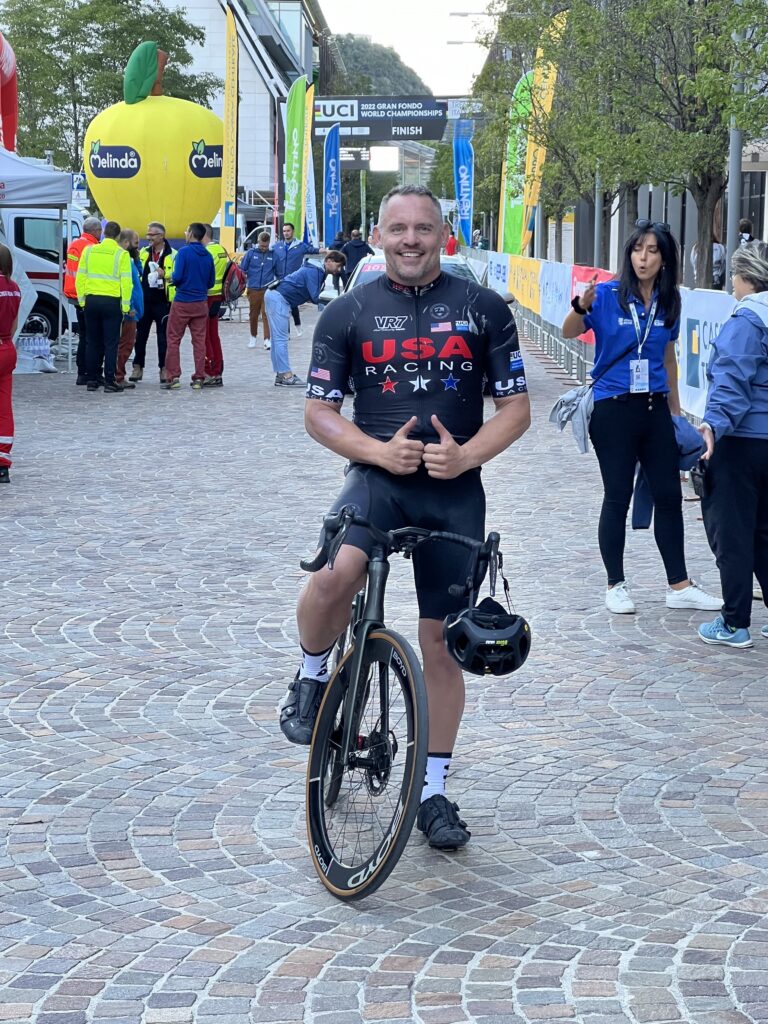
Ben Dodge | Arizona Bicycle Accident Lawyer